
...

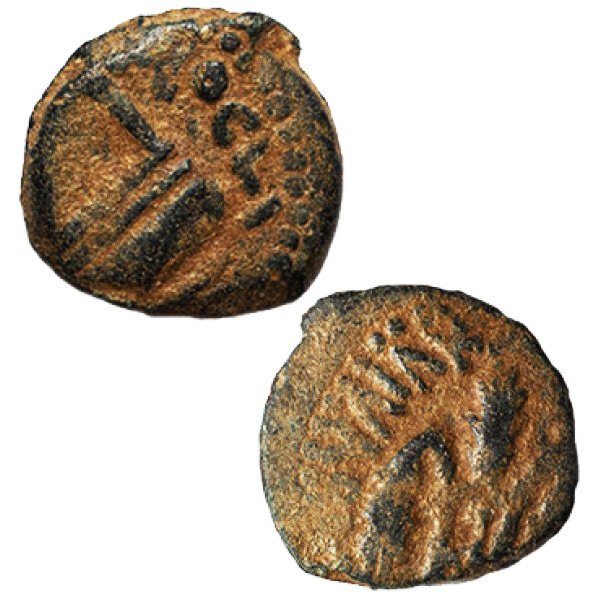
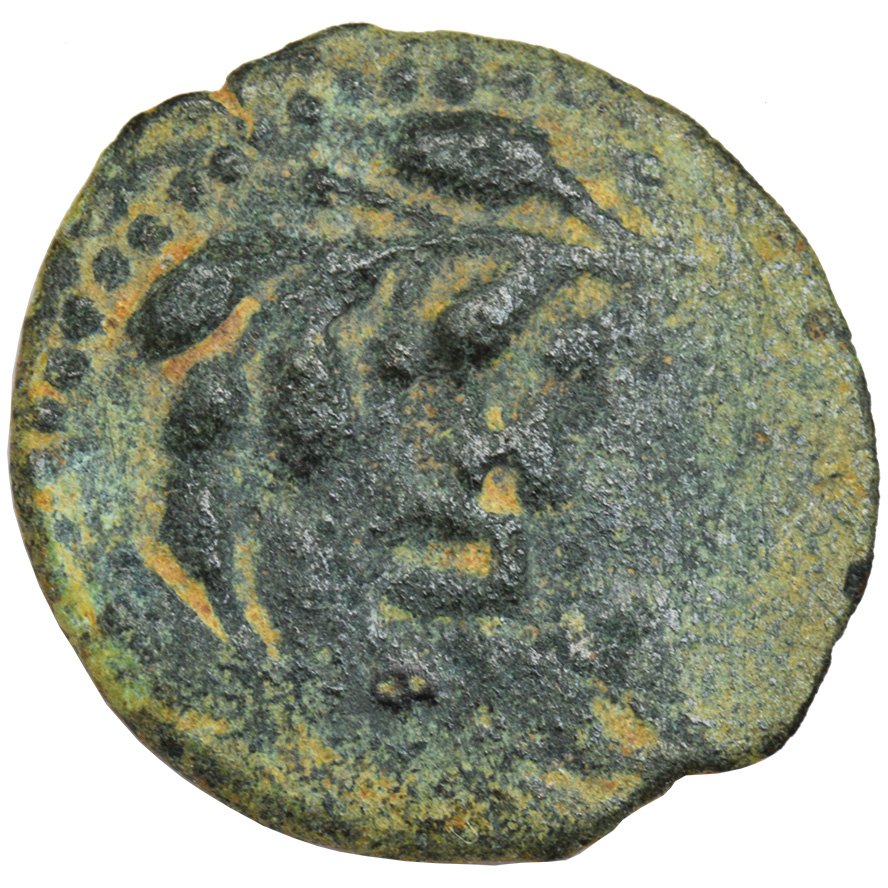
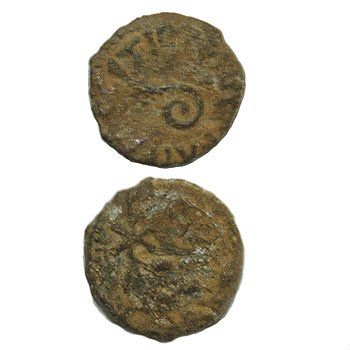
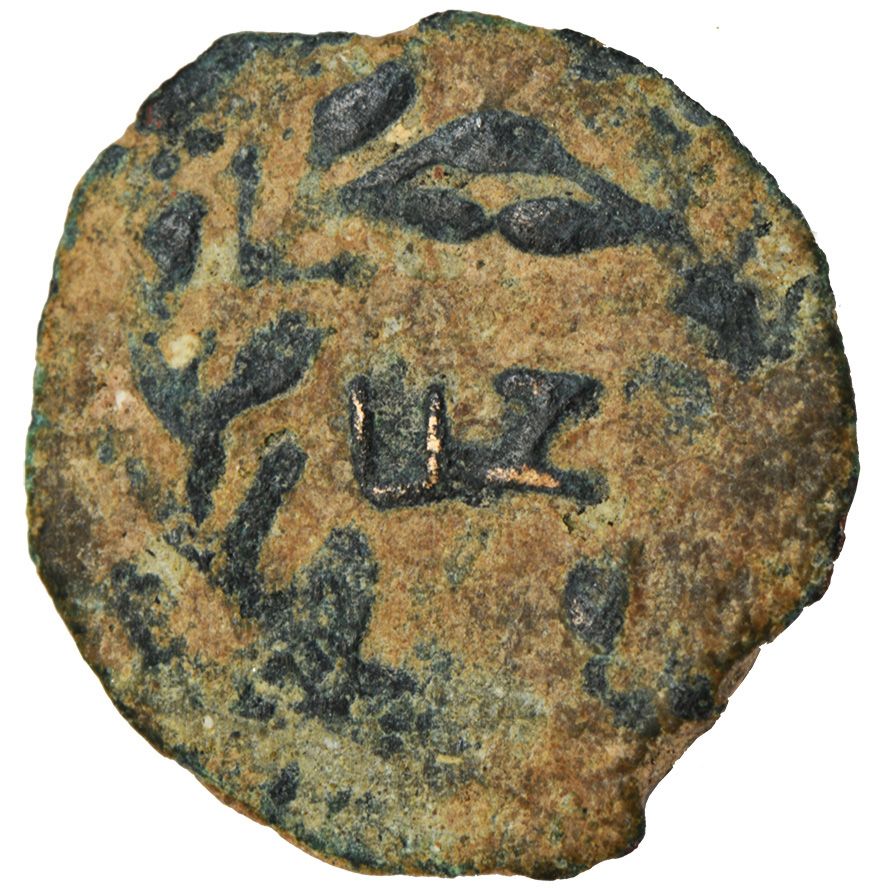
Authentic Bronze Coin – Time of Jesus – Governor Pontius Pilate – Year 30 AD

Pontius Pilate Coins

Pontius Pilate Coins: Ancient Artifacts from Jesus’s Time

Bronze coins minted during the reign of Pontius Pilate offer a remarkable window into one of history’s most pivotal periods. Furthermore, these ancient artifacts, known as prutah, circulated through the markets of Jerusalem when Jesus walked the earth.

Additionally, they provide tangible connections to the events described in the New Testament, making them invaluable to both historians and believers.

Moreover, these coins represent more than mere currency—they embody the political tensions and religious complexities of first-century Judea. Consequently, understanding their significance helps illuminate the world in which Jesus lived and died.

The Roman Governor Who Changed History

Pontius Pilate served as Roman Prefect of Judea from 26 to 36 AD. During this time, he governed a region marked by religious fervor and political unrest. Subsequently, his name became forever linked to the crucifixion of Jesus Christ, as recorded in Matthew 27:2: “And when they had bound Him, they led Him away and delivered Him to Pontius Pilate the governor.”

Pontius Pilate Coins and Biblical scene with Jesus and the crowds

While other Roman governors ruled Judea, Pilate’s legacy endures primarily because of his role in Jesus’s trial. However, his bronze coins provide additional insights into his administration and the broader Roman occupation of the Holy Land.

Judea Under Roman Rule: A Volatile Period

The historical context surrounding Pilate’s governorship reveals a complex political landscape. Roman authority clashed with Jewish religious traditions, creating ongoing tensions throughout the region. Additionally, the economic system required local currency that reflected Roman power while remaining acceptable to Jewish merchants.

During this era, Roman governors typically minted coins to assert their authority and facilitate commerce. However, they faced unique challenges in Judea, where religious sensitivities influenced monetary design decisions.

Understanding Pontius Pilate Coins: Design and Significance

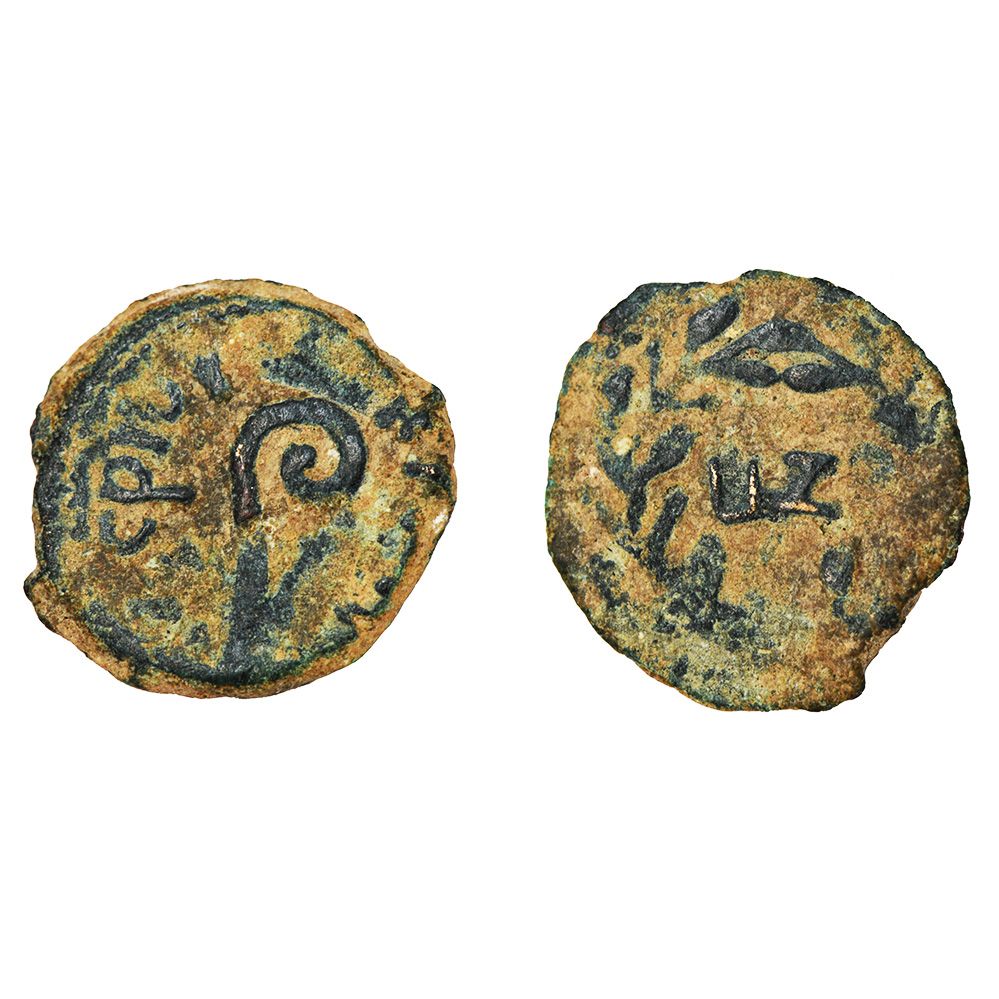
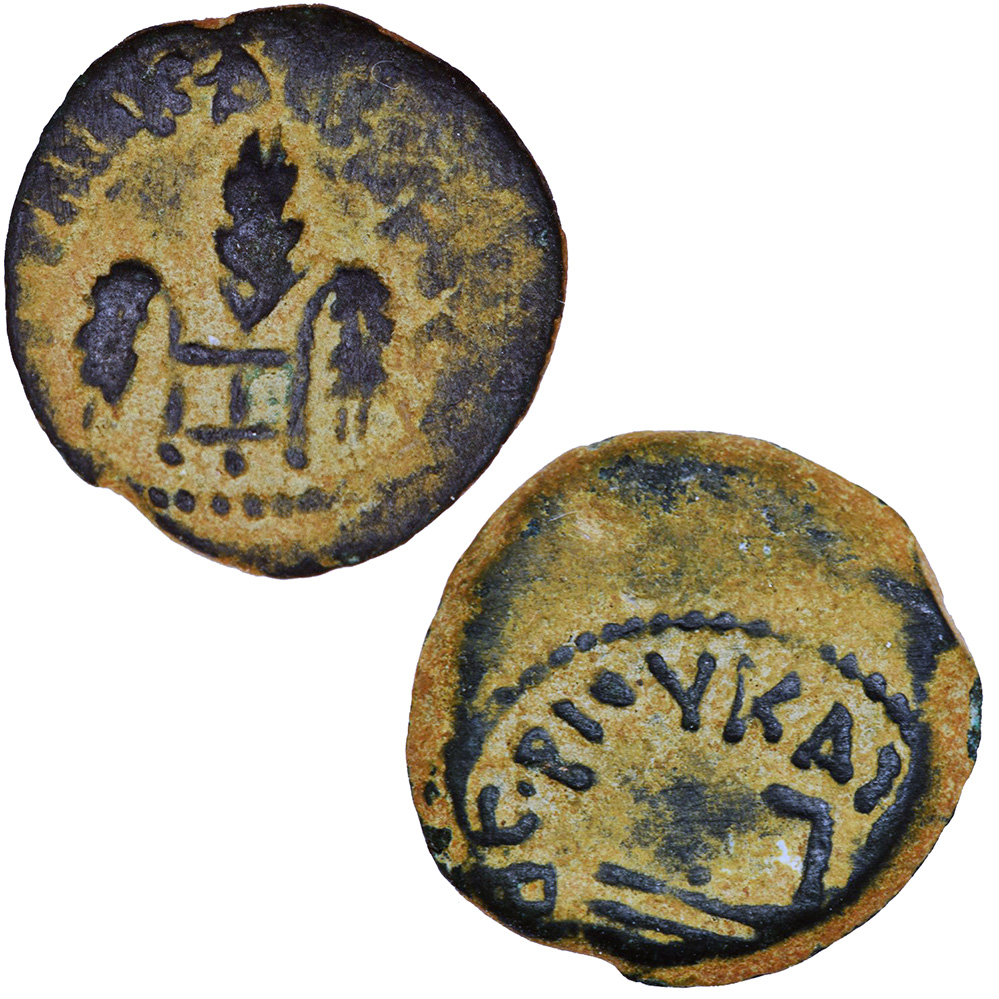
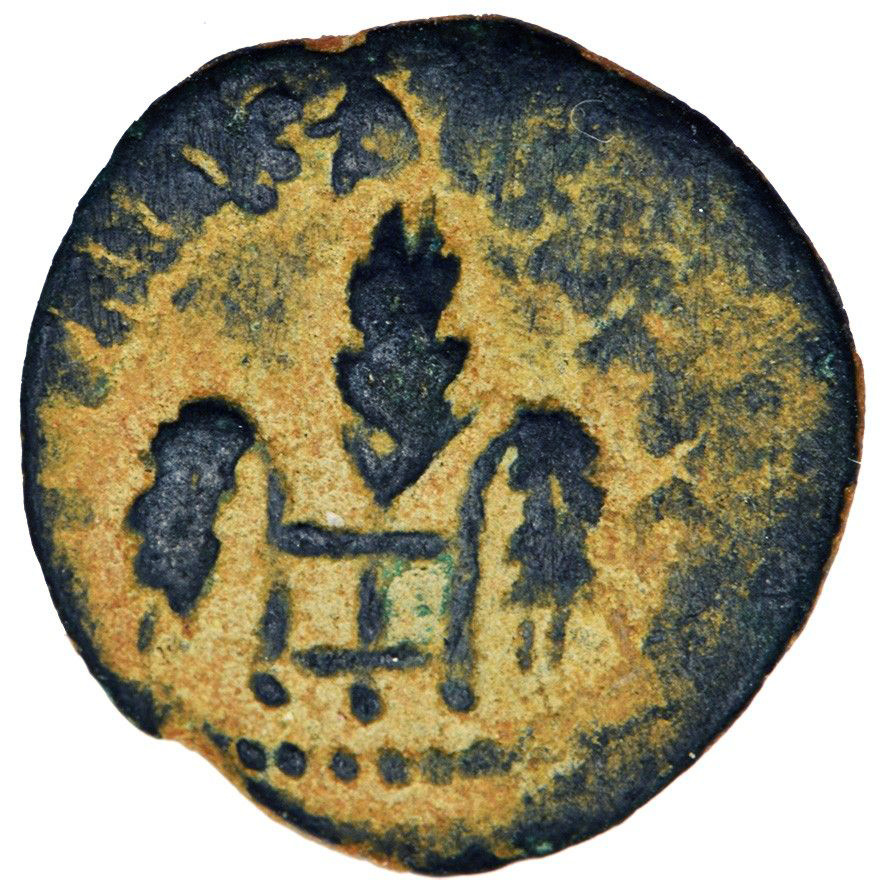
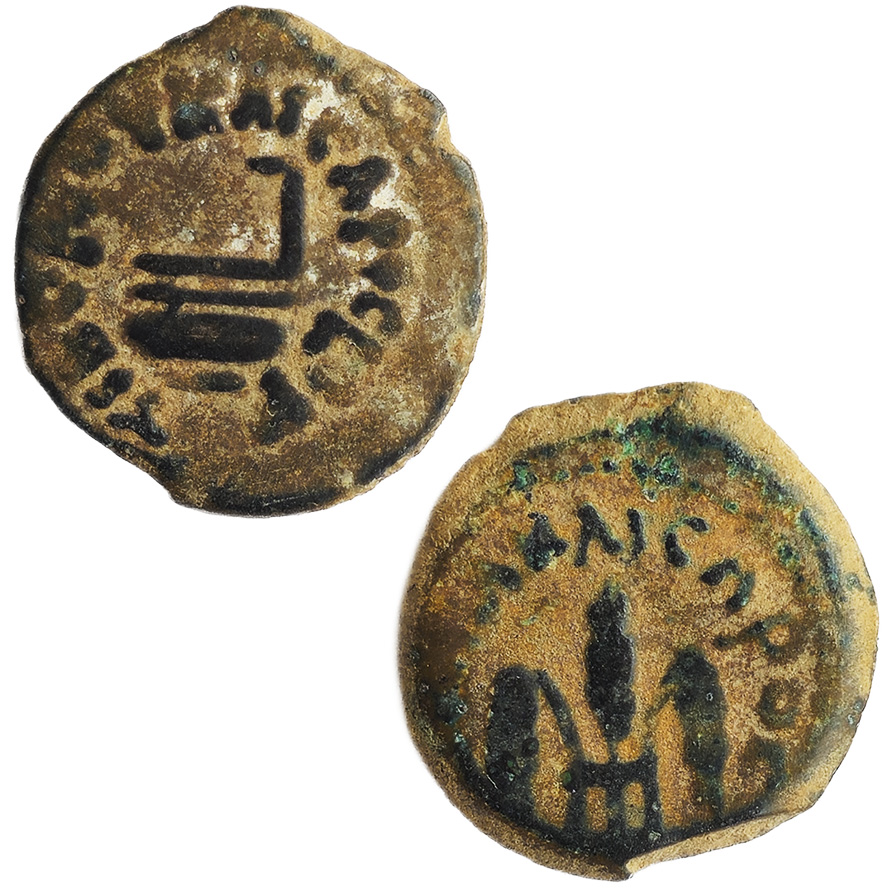
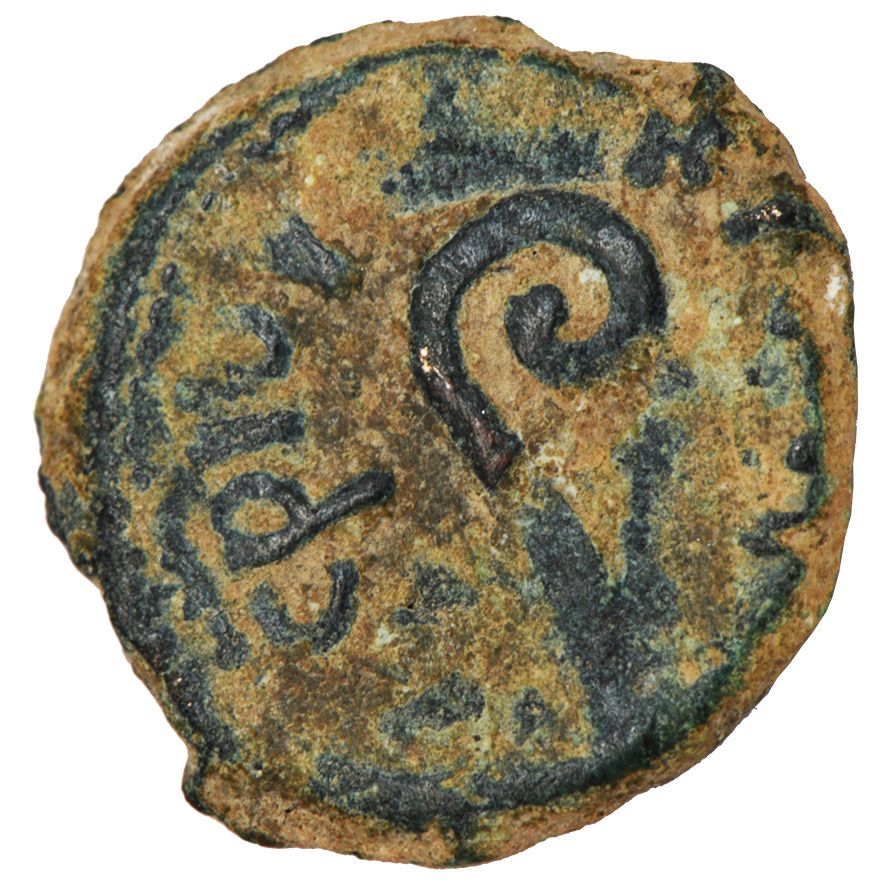
The bronze prutah coins minted by Pontius Pilate between 26 and 36 AD reveal fascinating details about Roman-Jewish relations. Notably, these coins avoided human imagery, respecting the second commandment’s prohibition against graven images. Nevertheless, Pilate included controversial pagan symbols that challenged Jewish sensibilities.

Material and Construction

These coins were crafted from bronze, a durable material suitable for everyday commerce. Additionally, the prutah denomination represented the smallest currency unit in circulation, making these coins accessible to ordinary citizens.

Symbolic Elements

Pilate’s coins featured distinctive symbols that conveyed Roman religious and political authority:

  • Lituus: A curved staff used by Roman augurs for divination practices
  • Simpulum: A ladle employed in pagan libation ceremonies
  • Three bound ears of barley: Symbols of fertility and abundance
  • Wreath motifs: Representations of victory and honor
  • Greek inscriptions: References to Tiberius Caesar and dating information

Controversial Religious Imagery

What distinguishes Pilate’s coins from other Roman governors’ currency is their bold use of pagan symbols. While he respected Jewish prohibitions against human imagery, he incorporated religious symbols that many Jews found offensive. Consequently, these design choices reflected the ongoing tension between Roman authority and Jewish religious practices.

Biblical and Historical Significance

For Christians and biblical scholars, Pontius Pilate coins hold extraordinary significance. These artifacts circulated during Jesus’s ministry and were likely handled by people who witnessed his teachings. Furthermore, they provide tangible connections to the events described in the Gospels.

The coins’ historical importance extends beyond their biblical connections. They offer insights into the daily economic life of first-century Judea, revealing how Roman administrators balanced political authority with local customs. Additionally, they demonstrate the complexities of governing a diverse religious population under imperial rule.

Numismatic Value

In the field of numismatics, Pontius Pilate coins represent some of the most sought-after ancient artifacts. Their connection to Jesus’s time makes them particularly valuable to collectors and religious institutions. Moreover, their historical significance ensures continued interest among scholars and believers worldwide.

Archaeological Discoveries and Authentication

Archaeological excavations throughout Israel have uncovered numerous Pontius Pilate coins, confirming their widespread circulation during the first century. These discoveries provide valuable context for understanding the economic and political climate of Jesus’s era.

Authentication of these ancient coins requires careful examination by experts who analyze their construction, materials, and symbolic elements. Legitimate dealers ensure that each coin comes with proper documentation from recognized authorities.

Modern Excavation Sites

Archaeological sites across Israel continue to yield Pontius Pilate coins, particularly in Jerusalem and surrounding areas. These discoveries help historians piece together the daily life of first-century inhabitants while providing physical evidence of Roman administrative practices.

Zak’s Antiquities: Expertise in Biblical Coins

Located in Jerusalem’s heart, Zak’s Antiquities specializes in authentic biblical coins from the Roman period. As a licensed antiquities dealer, Zak provides coins that come with export approval from the Israel Antiquities Authority (IAA). Furthermore, every artifact includes a certificate of authenticity, ensuring buyers receive genuine historical pieces.

The family-owned business has operated on Christian Quarter Road since 1964, building a reputation for expertise in ancient numismatics. Additionally, Zak’s knowledge of biblical-era coins provides valuable insights for collectors and scholars alike.

Beyond their commercial value, these coins represent excellent investment opportunities. Their historical significance, combined with limited availability, makes them increasingly valuable over time. Moreover, their connection to Jesus’s era ensures continued demand among collectors worldwide.

Preserving History Through Ancient Currency

Pontius Pilate coins serve as remarkable bridges between ancient history and modern faith. These bronze artifacts, minted during one of history’s most significant periods, provide tangible connections to the world of Jesus Christ. Furthermore, they offer unique insights into the political and religious complexities of first-century Judea.

For believers, historians, and collectors, these coins represent more than ancient currency—they embody the enduring legacy of pivotal historical events. Additionally, their continued discovery and study contribute to our understanding of biblical times and the broader Roman Empire.

Whether displayed in private collections or studied in academic settings, Pontius Pilate coins continue to fascinate and inspire. They remind us that history lives on through physical artifacts, connecting us directly to the people and events that shaped our world.

Showing all 11 results

Top
X